The supplement and nutraceutical industry is booming—but too many brands lose money, shelf life, and customer trust by getting their packaging wrong. Here's what you actually need to know before you order your first (or next) batch of containers.
Whether you're launching a new protein powder, scaling a vitamin line, or packaging your first run of greens supplements, there's one decision that will quietly make or break your product: packaging.
Not your formula. Not your label design. Your packaging.
The wrong container can degrade your product before it reaches the customer. The right one protects potency, builds trust on the shelf, and keeps your costs predictable as you grow. Yet most supplement brands treat packaging as an afterthought—and pay for it later with returned product, failed inspections, or margins that don't make sense.
This guide walks you through everything you need to consider when choosing packaging for supplements and nutraceuticals, from material selection and FDA compliance to sizing decisions that actually affect your bottom line.
Key Takeaways
- Start with your product format (powder, capsule, liquid)—not aesthetics
- FDA-compliant, food-grade, BPA-free containers are non-negotiable
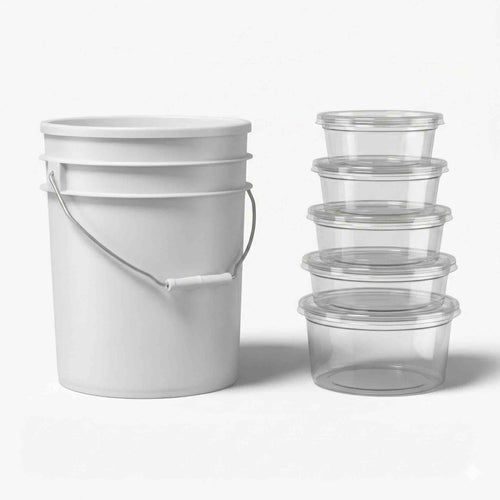
- HDPE plastic is the workhorse material for most supplement packaging
- Size your containers to your actual product volume—not your ego
- Your lid choice affects freshness, safety, and customer experience
- Domestic sourcing protects your supply chain and your margins
Start With What You're Packaging—Not What Looks Cool
It's tempting to start with aesthetics. You've seen the sleek matte-black jars on Instagram and want that vibe for your brand. But packaging decisions need to start with what's going inside the container.
Different supplement formats have very different packaging needs:
| Format | Key Packaging Need | What to Look For |
|---|---|---|
| Powders | Airtight moisture barrier | Wide-mouth round containers with tamper-evident lids |
| Capsules & Tablets | Limited air exposure | Desiccant-compatible containers that prevent moisture buildup |
| Gummies & Chews | Strong vapor barrier | Wider openings; heat-resistant seals to prevent fusing |
| Liquids | Leak-proof & chemical compatibility | Containers rated for your specific liquid (acidic, oil-based, etc.) |
Pro Tip: Before you pick a container, write down exactly what your product is, what conditions degrade it, and what environment it needs to stay stable through shipping, storage, and daily customer use. This simple exercise prevents expensive packaging mistakes down the road.
Food-Grade and FDA Compliance Aren't Optional
If you're selling any ingestible product in the United States, your packaging must be food-grade and FDA-compliant. This isn't a suggestion—it's a legal requirement under the Federal Food, Drug, and Cosmetic Act.
Here's what that means in practical terms:
- Food-grade certification means the container materials have been tested and approved for direct contact with food and supplements. The materials won't leach harmful chemicals into your product under normal storage conditions. Look for containers explicitly marketed as FDA-approved and food-grade—don't assume that any plastic container qualifies.
- BPA-free matters. Bisphenol A (BPA) is a chemical found in some plastics that has raised health concerns. While the science continues to evolve, consumer demand is clear: supplement buyers actively look for BPA-free packaging. Using BPA-free containers isn't just about compliance—it's a trust signal for health-conscious customers.
- Tamper evidence is expected. The FDA requires tamper-evident packaging for most dietary supplements sold over the counter. This means your packaging needs a visible indicator that shows whether it's been opened—think shrink bands, sealed lids, or induction seals.
Red Flag: If your packaging supplier can't clearly confirm that their products are FDA-approved, BPA-free, and suitable for direct food contact, move on. No price savings are worth the compliance risk.
Material Matters More Than You Think
Most supplement containers are made from one of a few common plastics. Understanding the differences helps you make smarter decisions:
| Material | Best For | Key Benefits |
|---|---|---|
| HDPE | Powders, bulk vitamins, most supplements | Durable, chemical-resistant, FDA-approved, lightweight, recyclable, cost-effective |
| PET | Liquids, capsule bottles where visibility matters | Excellent clarity, good moisture barrier, widely recyclable |
| PP | Lids, closures, flip-top caps | Flexible, fatigue-resistant, microwave-safe |
For most powder-based supplements, HDPE containers with secure lids hit the sweet spot of protection, cost, and practicality. You don't need specialty materials unless your product has unique chemical properties that demand them.
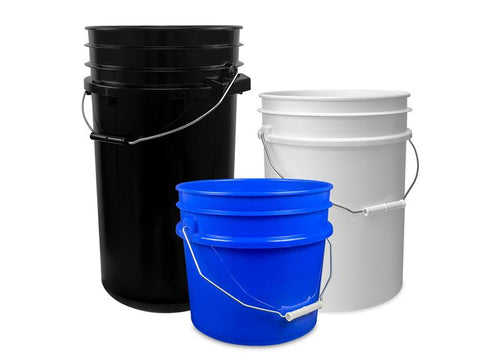
Size Your Containers to Your Business—Not Your Ego
Here's a mistake we see constantly: brands order containers that are too large for their actual product volume because they want to look "premium" on the shelf.
A half-empty container doesn't look premium. It looks like you're trying to trick the customer. And it costs you more to ship air.
Instead, match your container size to your actual product volume with a sensible amount of headspace:
- Powders: Plan for about 20–30% headspace above the fill line. This accounts for settling during shipping and gives customers room to scoop without making a mess. A 32 oz container works well for a standard 30-serving protein powder; smaller runs often fit perfectly in 16 oz containers.
- Capsules & tablets: Count your units and test-fit before committing. A 60-count capsule bottle looks very different from a 120-count, and customers notice when there's too much empty space.
Smart Move: Start with smaller quantities when you're testing a new product or entering a new market. Suppliers who offer low minimum order quantities (some start as low as 48–60 units) give you the flexibility to test without committing thousands of dollars to packaging inventory you might not use.
Don't Overlook the Lid
The lid is arguably the most important part of your packaging, and it's the part most brands spend the least time thinking about.
Your lid needs to do several jobs at once: seal tightly to protect freshness, provide tamper evidence for safety, open easily enough for daily use, and close securely so the product doesn't spill in a gym bag or pantry.
| Lid Style | Best For | Tradeoff |
|---|---|---|
| Pry-off | Products not accessed daily; excellent seal & tamper evidence | Less convenient for frequent use |
| Screw-on | Products used frequently; easy daily access | Needs gasket or foam liner for best moisture seal |
| Tamper-evident (breakaway band) | Retail-ready products; combines security + reusability | Slightly higher cost per unit |
| Recessed | Powder products; flush fit, clean look, stacks well | May not suit products needing a flip-top |
Think about your customer's daily experience. If they're scooping protein powder every morning, they need a lid that's easy to remove and replace with one hand. If it's a bottle of capsules they take once a day, a tighter seal that prioritizes freshness makes more sense.
Made in the USA Isn't Just a Marketing Claim—It's a Supply Chain Strategy
The last few years have taught every business owner a hard lesson about supply chain fragility. Container ships stuck in ports, months-long delays from overseas manufacturers, and unpredictable cost increases made life difficult for brands relying on imported packaging.
Sourcing your packaging from domestic manufacturers offers tangible advantages beyond the label:
- Faster fulfillment. Domestic suppliers can typically ship within 1–2 business days, compared to weeks or months from overseas. When you land a new retail account or see a spike in online orders, you can restock packaging quickly.
- Consistent quality. U.S. manufacturing facilities operate under FDA oversight and consistent quality standards. You're less likely to receive a shipment that doesn't match your specifications or fails compliance checks.
- Lower risk. You're not exposed to international shipping volatility, currency fluctuations, or tariff changes. Your packaging cost stays predictable, which means your margins stay predictable.
- Smaller minimums. Many domestic suppliers serve small and mid-size businesses specifically, offering minimum orders that make sense for growing brands—not just enterprises ordering by the truckload.
Your Supplement Packaging Checklist
Before you place your next packaging order, run through this list:
| ☐ | Product compatibility—Is the container material rated for direct contact with your specific supplement type? |
| ☐ | FDA compliance—Is the container food-grade, BPA-free, and FDA-approved? |
| ☐ | Tamper evidence—Does the lid provide clear tamper-evident features? |
| ☐ | Size fit—Does the container match your actual product volume without excessive empty space? |
| ☐ | Moisture & air barrier—Does the packaging protect against your product's specific degradation risks? |
| ☐ | Customer experience—Is it easy to open, use, and reseal for your customer's typical usage pattern? |
| ☐ | Shipping durability—Will the packaging survive transit without cracking, leaking, or losing its seal? |
| ☐ | Supplier reliability—Can your supplier deliver consistent quality on a timeline that matches your business needs? |
Getting Started Without the Guesswork
Choosing packaging shouldn't feel overwhelming. If you focus on the fundamentals—food-grade materials, proper sizing, the right lid, and a reliable domestic supplier—you'll avoid the expensive mistakes that trip up most new supplement brands.
At ePackageSupply, we ship over 3 million food-grade containers every month to more than 6,000 businesses across the country, from first-time supplement brands to established nutraceutical companies. Over 98% of our products are made in the USA, most orders ship within 1–2 business days, and our minimums are built for businesses that are growing—not just the ones that have already made it.
Have questions about which container is right for your supplement product?
Our team is here to help—contact us and we'll point you in the right direction.