It's 6 a.m., still dark, and the thermometer by the barn door reads 8°F. You reach for the feed bucket and the lid won't budge. The water bucket you filled last night has a cap of ice on top and a split running down one side.
Winter is hard on buckets and harder on the person carrying them. Whether you're feeding a backyard flock or hauling feed for a whole herd, a few habits and the right lids keep your morning routine moving. Here's what cold does to plastic, how to handle your buckets when it's below freezing and how to color-code them so the right one is always in your hand.
What Does Cold Weather Do to Plastic Buckets?
Most food-grade buckets are made from HDPE (high-density polyethylene), the same #2 plastic used for milk jugs. HDPE stays tough in the cold, but it gets stiffer as the temperature drops. A bucket that shrugs off a bump in July is more likely to crack in January if you drop it full, knock it against a frozen gate or pry the lid with a screwdriver.
Our 5 gallon and 7 gallon buckets have 90 mil walls and are rated from -5°F to 160°F. The 2 gallon bucket has 70 mil walls and is built for freezer storage too.
Water is the bigger risk. It expands by about 9% as it freezes, and in a bucket filled to the rim, that ice has nowhere to go. The pressure can bulge the sides or split the bucket, however thick the walls are.
Temperature ratings come from the product specifications for each bucket. If your area regularly drops below -5°F, keep filled buckets in a barn, shed or other sheltered spot when you can.
How to Handle Buckets on Freezing Mornings
Leave Room at the Top
Fill water buckets a few inches below the rim so freezing water has space to expand.
Lower Full Buckets to the Ground
Cold plastic has less give, so set a full bucket down on frozen ground instead of letting it drop.
Open Snap-On Lids With an Opener
A bucket lid opener pops the lid without the cracked edges a screwdriver can leave behind.
Clear Ice From Gamma Seal Threads
Brush snow and ice off the threads before you close the lid so the gasket seals all the way around.
💡 Helpful Tip: If a gamma seal lid freezes tight, move the bucket somewhere warmer for a while instead of forcing it. At under $2 each, lid openers are cheap enough to keep one in the barn, the garage and the truck.
Color-Code Your Buckets by Job
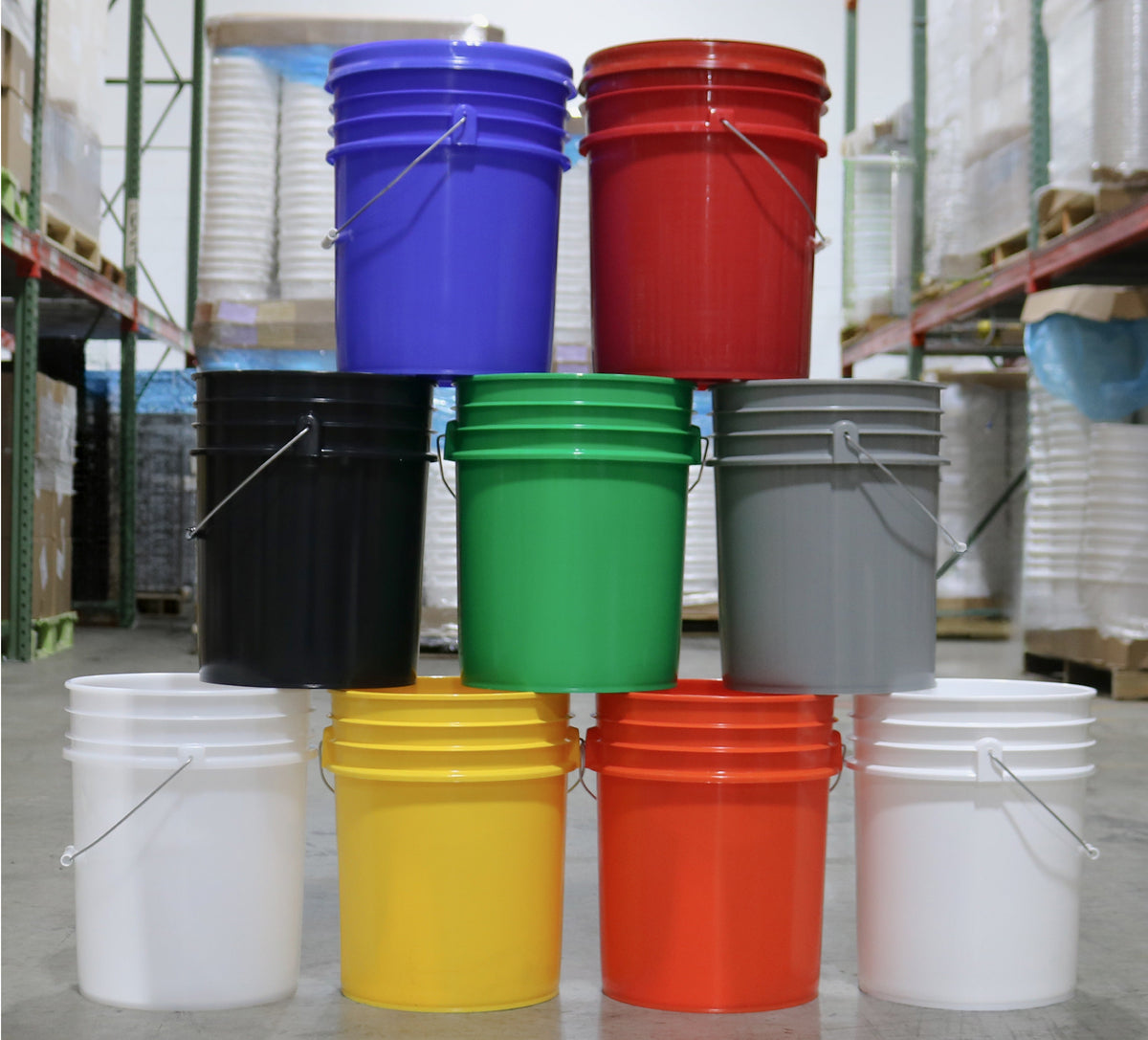
When every bucket in the barn is white, it's easy to grab the wrong one in the dark. Giving each job its own color takes the guesswork out of early mornings and keeps feed away from anything it shouldn't touch. Our 5 gallon 90 mil bucket comes in nine colors. Here's one way to divide them up:

Blue: Drinking water

Yellow: Layer feed

Orange: Scratch grains and treats

Red: Medicated feed, kept apart

White: Kitchen staples and egg washing

Translucent: Bulk storage you can see into

Green: Garden and compost scraps

Black: Stall cleanup

Gray: Ice melt and sand for paths
Use whatever system fits your place. The part that matters is that everyone who helps with chores knows it, and that a bucket used for cleanup or ice melt never goes back to holding feed or water.
Gamma seal lids come in seven of the same colors, and gasketed tear-strip lids come in 10, so you can match each lid to its bucket. Bucket and lid shades may vary slightly.
Which Lid Should You Use for Feed and for Water?
Feed needs to stay dry and out of reach of mice. Water needs to make it from the hydrant to the trough without ending up on your gloves. Each job calls for a different lid.
| Lid | Best For | Why It Works in Winter |
|---|---|---|
| Gamma Seal Lid | Feed you scoop every day | Twists on and off by hand, with a rubber gasket that keeps out moisture and pests. |
| Gasketed Tear-Strip Lid | Feed or grain stored for weeks | Stays sealed until you need it, and the tear strip shows whether it's been opened. |
| Pour Spout Lid | Hauling water | Keeps water covered on the walk out, and you can pour without taking the lid off. |
A gamma seal lid has two parts: a ring that snaps onto the bucket rim once and a lid that screws into the ring. The ring takes firm pressure to seat, so install it indoors with a rubber mallet before the weather turns. Our lid installation guide walks through it.
Which Bucket Size Fits Each Chore?
Size matters more when the ground is icy. A full 5 gallon bucket of water weighs about 42 pounds, and that's a lot to balance on a slick path. Two smaller loads are often safer than one heavy one.
Our bucket fill weight calculator shows what a full bucket of feed or water will weigh before you lift it.
-
2 gallon, 70 mil
Easy to carry one-handed. A good size for a single feeding, chick starter or treats. -
5 gallon, 90 mil
The everyday bucket for feed and water, in nine colors. Fits gamma seal, tear-strip and pour spout lids. -
7 gallon, 90 mil
Holds more feed per bucket in the feed room, so you refill less often. Comes in white or black.
Your Winter Bucket Checklist
Run through this list before the first hard freeze:
- ☐Lids: Check for cracks and worn gaskets
- ☐Gamma seal rings: Installed indoors
- ☐Colors: One per job, and everyone knows them
- ☐Lid opener: Hung where you open buckets
- ☐Ice melt: In its own bucket, away from feed
- ☐Spares: A few extra buckets on the shelf
Get Set Up Before the Cold Sets In
Winter goes smoother when your buckets are the one thing you don't have to think about. Use sturdy buckets for the jobs that take a beating, give each job its own color and match the lid to what's inside. You can shop the 5 gallon bucket in all nine colors, or if you're stocking a whole operation, get volume pricing on a pallet of 120.
Stocking Up for the Season?
Get volume pricing on a pallet of 5 gallon buckets in the color you need, or call to talk through what your farm uses.
Prefer email? Contact us.